

Talking all about my experience and diagnosis of Dyslexia and Dyspraxia
Hi! Long-time, no blog I know. I cannot believe we’re now half-way through March. This year is a racing by already and hopefully it’s not long until we have freedom to travel & see our friends & family. Brighter days really are on their way!
Any who, this week is Neurodiversity Celebration Week (15th– 21stMarch) & it’s week I didn’t know existed but now that I do, I’m fully embracing it. Talking about Dyspraxia and Dyslexia has been at the top of my to-do blog list before I even made my page because it has had a huge impact on my life. This week, when it’s about celebrating all things neurodiverse this just seemed like the perfect time to finally write about it. So I hope you’re ready for the rollercoaster of a blog that’s ahead of you!
Neurodiversity is a term that applies to conditions that are based on neurological differences. Alongside Dyspraxia and Dyslexia, it also includes conditions such as ADHD and Autism. Around 1 in 7 people have a condition that comes under the neurodiverse umbrella, so whilst they are pretty common, the level to which they effect people varies hugely. So, some may have been diagnosed from a young age and have more obvious traits and some can go the majority of their life, or a huge part of their life without realising they have one.
My own diagnosis was pretty late as it actually happened when I was 21 and in in the first term of my Master year back in 2017. Being diagnosed with severe Dyslexia and severe Dyspraxia was a shock but also a huge, huge relief. It made so much sense and all times I struggled with doing simple tasks was no longer because I was inadequate or stupid. I think being undiagnosed for so long has had an enormous impact on my self-confidence but on the flip side, I also think not being diagnosed meant that I’ve worked hard to prove myself. It’s a really hard situation because part of me wishes that I could go back and have all my papers remarked because even though I worked so hard, I never got a final ‘A’ grade or did as well as my peers. Teachers comments at parent’s evening would always be read more, read better books, prepare yourself more so you’re not rushing your work. It makes me wonder if my A-level Law teacher would have still told me that I would never get into Leicester because I was aiming ‘too high’ and I should ‘lower my expectations of my abilities’.
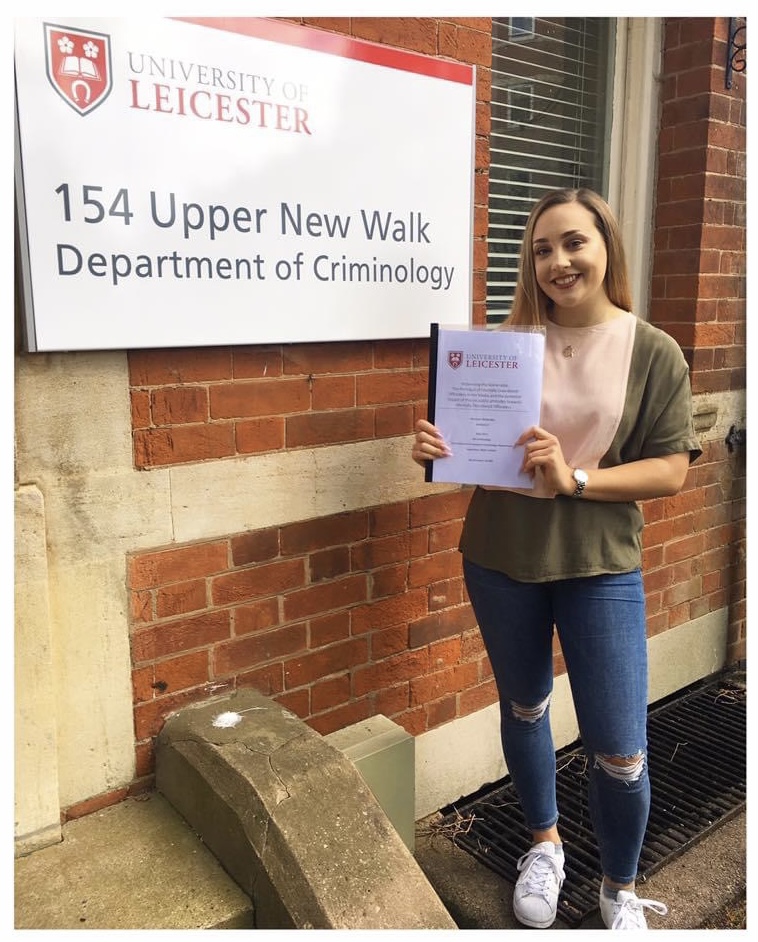
The worst of all my pre-diagnosis dramas was my Undergraduate dissertation. Throughout my three years at Leicester, my grades bounced around a reasonable 2.1 or a high 2.2. I always started work long before my peers and they would begin after me and overtake me, finishing & submitting before I had even finished a draft. After years of this being the case, I assumed it was like this because I was just ‘a little bit stupid’ – literally how I described myself to my peers when we would sit in the library and I would be struggling.
Additionally, crippled with anxiety about my work, I actually didn’t look at the majority of my returned grades between the second term of 1st year until 3rd year when I decided I really needed to know what I was going to come out with overall. I actually managed to get away with this for so long because if you did ok, you received an email saying your grade was back and the feedback was ready but if you had been graded less than the pass mark, you were requested to go to the degree’s department. It sounds ridiculous but it was easier to not look at my grades and be blissfully unaware.
When I submitted my dissertation, I was still working on it up to the last deadline. I had so much help from my boyfriend and peers as they helped me rewrite sections, which is exactly what I had done had before with previous work and those grades had been ok, so I just expected my dissertation would also be ok. I submitted with the hope deep down that I’d actually done really well and I’d get a high 2.1 or even maybe a 1stand this would mean my overall degree would come out at a 2.1 and that, I would be so happy with and my hard work would have paid off.
Things didn’t quite go to plan and I didn’t ‘fail’ my dissertation but when the pass mark is 40 and you get 45, it’s definitely a shock and to me, this was & still is a fail. I was and still am so embarrassed that I did so badly in a piece of work (its actually the lowest grade in my entire 3 years, lower than the first piece I ever submitted when I didn’t even understand referencing) which I worked so hard on and was the biggest submission of my degree. It was unbearably humiliating, so much so that my mum came to pick me up as I was a bit of a state. I said to my parents I wasn’t going back, I wasn’t going to my graduation and that was that.
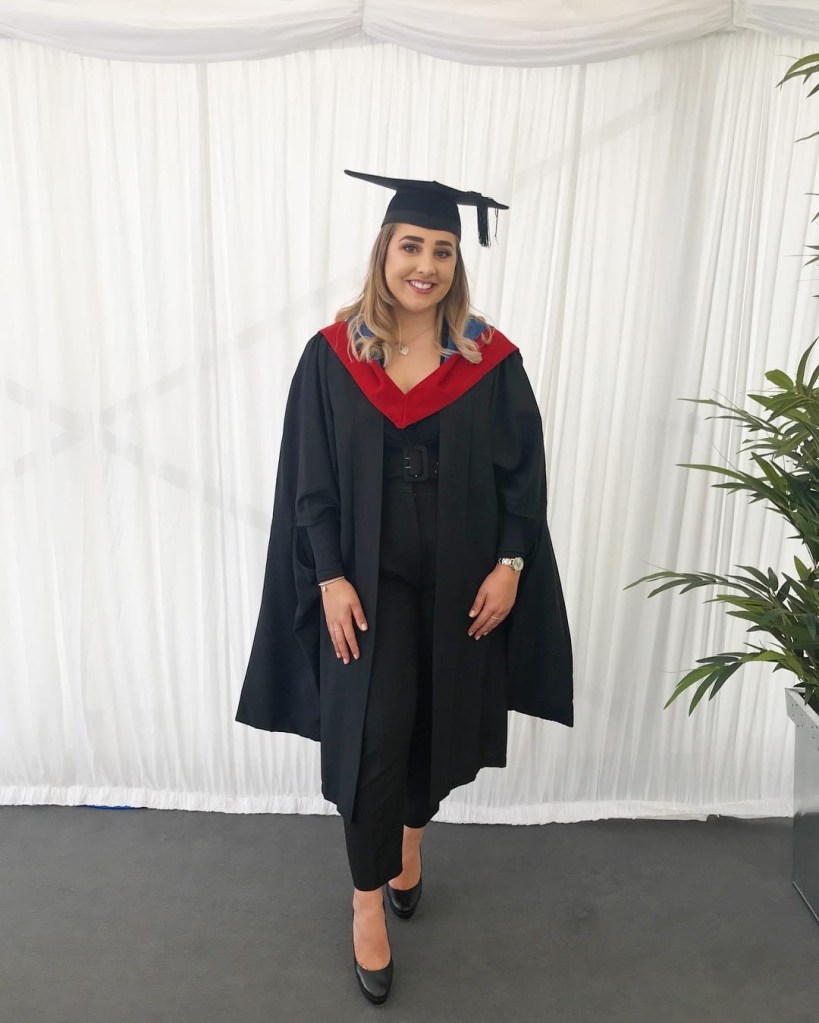
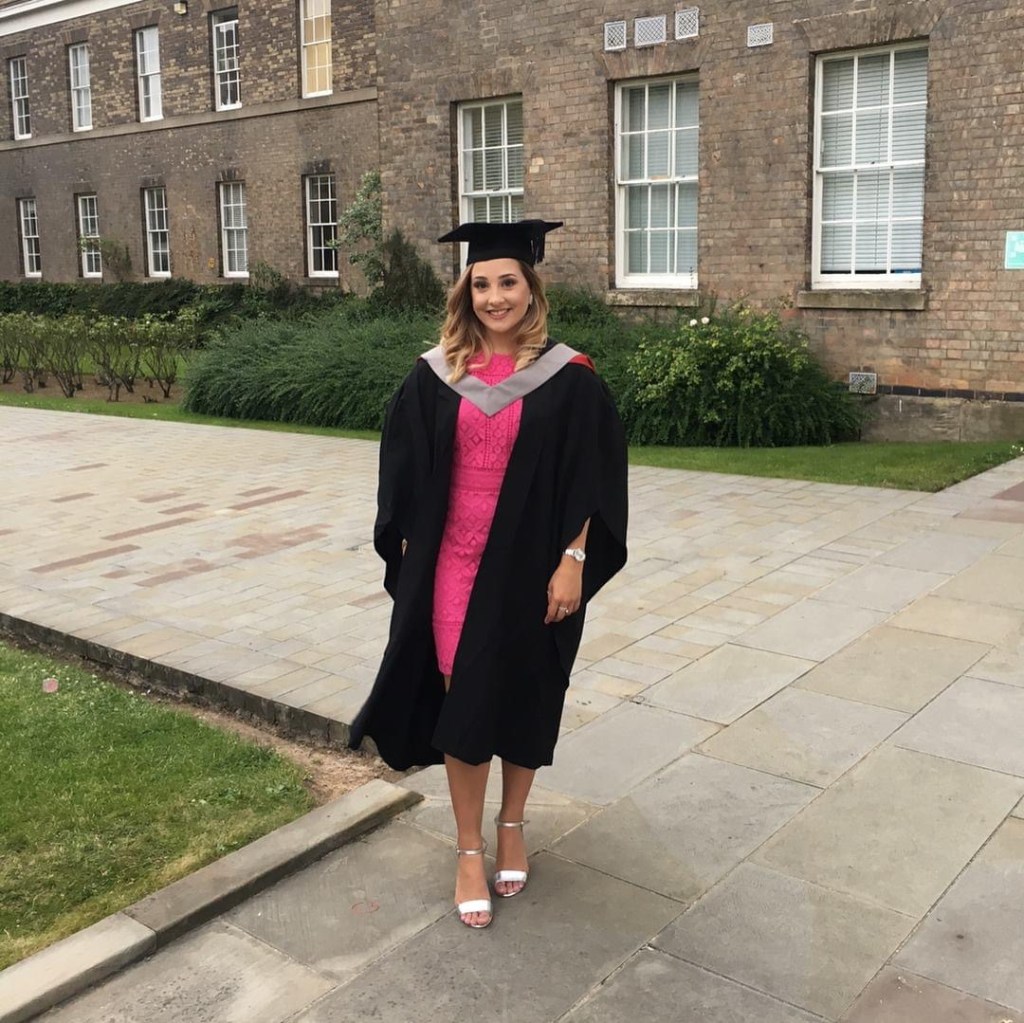
I did eventually go back and I did ok in the other final submissions around that time and I’m so glad I went to my graduation because I know I would have had major regrets otherwise and it was so lovely to see my friends again. It was a bittersweet day knowing your closest peers had received 1stclass degrees (absolutely well-deserved of course, and I was SO proud of them) but I was too embarrassed to open my certificate and see the final result. That being said, any degree of any level is a HUGE achievement and should be celebrated and I am in no way slating anyone’s degree but personally, I was so disappointed with myself.
So few people know what happened but I think it’s good to address it now for my own acceptance – even as I’m writing this, 4 years and 1 MSc later, I’m overheating with anxiety sweats and shakes. But I want to explain the situation because if it wasn’t for my terrible dissertation, I wouldn’t have been diagnosed and so it’s kind of a good thing that it all went so, so, so wrong.
Fast forward to my Masters, I arranged a meeting with one of my lecturers to discuss my worries about whether I could actually do the course because I didn’t see how I could cope with the work at the next level up and I considered my other options which included dropping out, moving home and getting a job. She asked me to bring my dissertation with me as I’d explained the situation. I’m not even joking, she opened it, read the first page and immediately said ‘have you ever been tested for Dyslexia?’. Long story short, after a meeting with the Accessibility Centre on campus, I was booked in for a 4-hour long assessment (this is standard it seems) and diagnosed, unsurprisingly, with severe Dyslexia and surprisingly, severe Dyspraxia.
Even though these conditions are pretty common, I just wanted to give a few examples of their symptoms because it’s always good to raise awareness! So, Dyslexia – summarised by the wonderful NHS website which I will link here, is a ‘common learning difficulty that can cause problems with reading, writing and spelling’. No person is the same and therefore the symptoms can really vary, especially as it has no effect on a person’s intelligence. Some of the most common symptoms are delayed speech or speech problems, poor spelling, mixing letters up or putting them the wrong way around, slow reading or visual issues when reading and difficulty carrying out directions or sequences. Specifically, in adults it includes ‘poorly organised written work, difficulty planning or writing essays, difficulty revising, struggling to remember pin numbers or phone numbers’. Whilst I have a number of these symptoms, my spelling and writing skills aren’t too bad so I think this is partially why I wasn’t an obvious case. My main symptoms are my poor short-term memory, poor concentration, brain fog and short attention span.
Quite often when Dyslexia is found it’s diagnosed alongside ADHD, Dyscalculia (problems with numbers) or in my case, Dyspraxia. Being diagnosed with this was so unexpected but it just explains SO many things about the way I function, think, process and move. Dyspraxia is also known as Developmental Co-ordination Disorder (DCD) and again, from the wonderful NHS website, actually affects a reasonable percentage of people but is ‘3 or 4 times more common in boys, than in girls’. Risk factors for developing the condition can be premature birth, low birth weight, drugs or alcohol being taken during pregnancy or family history. A couple of my cousins have dyspraxia too, so we assume this is why I also do. Again, DCD has no effect on intelligence and our brains are just a bit special because they work differently.
Common symptoms in children and teenagers include lack of co-ordination, writing, drawing, doing up buttons or shoe laces, keeping still, difficulty concentrating, difficulty following instructions, poor organisation skills, slow at picking up new skills, difficulty making friends, behaviour problems and low self-esteem. Additionally, on the Dyspraxia Foundation website symptoms for adults also include poor balance, fatigue and poor posture, lack of manual dexterity, repetition when speaking, inability to pronounce some words, poor visual perception, difficulty in planning, accuracy problems, impulsive and slow to finish a task. These symptoms have always been prevalent for me, but now there’s a reason for them and that’s such a comfort to know.
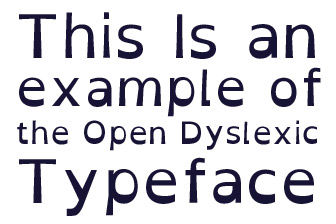
Obviously these two conditions have had a pretty big impact on my life but there are definitely things that I can do and I already do to make life a little bit easier for myself. It is of course all trial and error and there is no aid fits all, so although it can take a while to find what helps you out, when you find that aid that works for you it makes such a huge difference. For my Dyslexia, it was recommended that coloured plastic sheets can make reading easier but on my Kindle and phone I have found that instead of a screen tint, a dyslexia friendly font has literally changed my life. It’s an actual revelation and I cannot recommend it enough! I’ve added a picture below so you can see what it looks like.
To help manage my Dyslexia and Dyspraxia, I try to keep organised so I can take my time with tasks which I’m naturally slower at and I don’t get overwhelmed. I’ve also realised being aware of my conditions means I feel more comfortable asking people to re-explain tasks or instructions. I also am more self-forgiving when I’ve accidentally dropped, broken or spilt something which happens soooo regularly. Also, I now consciously break down tasks or take time out from tasks I find challenging because I know I need to save them for a time when I’m not fatigued or my brain is already attempting to do 1000 things at once.
One of the symptoms which is associated with both conditions which I struggle with so much is tripping over word/not being able to use my words to effectively explain something and the many, many words I cannot spell or pronounce. I find it really embarrassing and I get flustered pretty easily talking to people but my travels and meeting lots of new people has really helped this. Raising awareness about these conditions will hopefully mean people will be more aware of symptoms like this and therefore, a litttttleeee more considerate too!
Sometimes it’s still really frustrating and I do still get annoyed when I feel like I can’t complete simple tasks but I’m adapting and this week I’m celebrating my disabilities for what they are rather than hiding them away and I think that is a huge step forward for me. I’m learning to celebrate myself and I’ve achieved both before and after my diagnosis, whether that be my Undergraduate degree, my Master’s degree or just getting through the day without breaking or dropping something. This week is about celebrating everyone who deals with these challenges on top of day-to-day life and reminding us all to just being a little bit kinder to ourselves because we ALL deserve that. Thanks for reading if you’ve got to the end, I know it has been a bit of an information overload but sometimes it’s just needed! As always if please feel free to message me on Instagram (@hannahshildrake) or via email (hannahshildrakeblog@gmail.com) if you have any questions about anything I’ve mentioned in my blog.
lots of love,
Han x


Links to helpful pages about these conditions:
The Dyspraxia Foundation here.
NHS Website for Dyslexia here.
NHS Website for Dyspraxia here.
It is never too late to be diagnosed and if you think you or a family member has these, then you should definitely explore that because having an explanation can be such therapeutic thing in itself.
Fabulous people to follow on Instagram if you have Dyslexia or Dyspraxia or want to know more:
@notjustclumsy
@thinkdyslexia
@theblackdyspraxic
@learn_dyslexia
@dyslexia_in_adults
 hannahshildrake.co.uk